


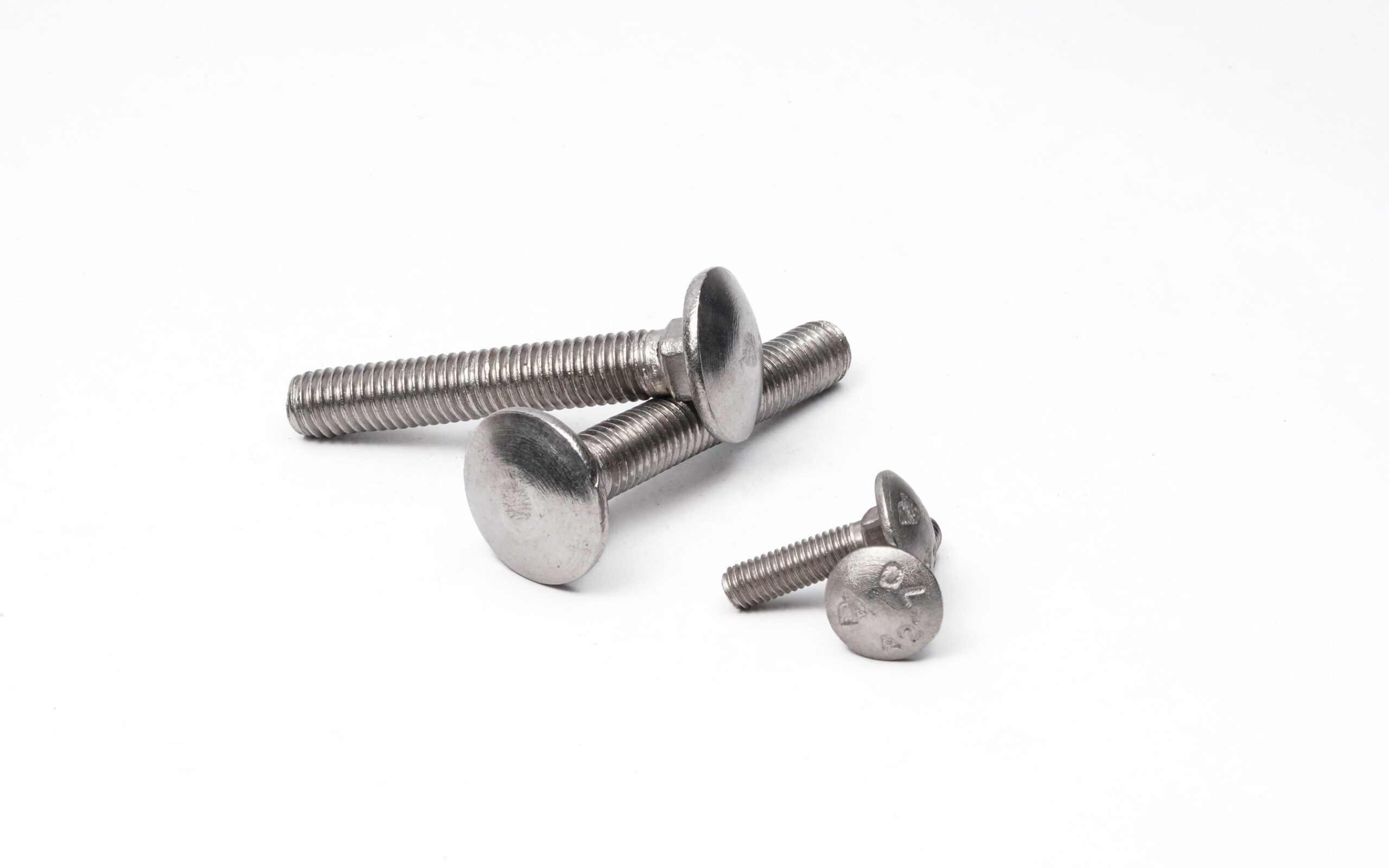
A customer receives stainless steel bolts, places a magnet near them, and the magnet sticks. The immediate thought is often, “This cannot be stainless steel.” That reaction is understandable. It is also not always correct.
Magnetism in stainless steel fasteners is one of the most misunderstood topics in industrial buying. A magnet test may be a quick check, but it is not a complete proof of grade, quality or authenticity. Genuine stainless steel fasteners, especially those made from austenitic grades such as SS 304 and SS 316, can show some magnetic response after manufacturing.
To understand why, you need to separate raw stainless steel from a finished fastener. Stainless steel in its annealed condition may be largely non-magnetic, depending on the grade. But fasteners are not simply cut from soft, untouched metal. They are drawn, headed, formed, rolled, trimmed and sometimes worked under pressure. These operations can change the structure of the steel at the surface or in highly deformed areas.
Cold working is one of the key reasons. When austenitic stainless steel is cold worked during wire drawing, cold heading or thread rolling, a portion of the structure can transform in a way that increases magnetic response. This does not automatically make the fastener defective. It also does not automatically mean the fastener is mild steel.
This matters because many buyers make expensive decisions based only on a magnet. They may reject usable material, delay a project or raise unnecessary disputes without checking the full specification. A magnet can tell you that a material has some magnetic attraction. It cannot tell you the exact stainless steel grade, chemical composition, corrosion resistance, thread accuracy or mechanical performance.
That does not mean magnetism should be ignored. If your order specifically required fully non-magnetic behaviour for a sensitive application, then the requirement should be clearly stated before purchase and verified through the correct method. Some industries, instruments or environments may have strict magnetic limitations. In such cases, do not rely on assumptions. Make the requirement part of the RFQ and purchase order.
For most industrial fastener applications, slight magnetism should be assessed calmly. First, check the purchase specification. Did it state SS 304, SS 316, A2 or A4? Did it mention a product standard, size, thread and certificate? Second, ask whether documentation is available. A material test certificate or supplier confirmation is more meaningful than a simple magnet check. Third, consider the manufacturing process. Cold-formed and thread-rolled fasteners may show more magnetic response than flat stainless steel sheet of the same family.
You should also be careful about comparing different fastener types. A small screw, a cold-headed bolt, a washer and a nut may not respond identically to a magnet, even if they are all stainless steel. The level of cold work, shape and processing history can differ.
So, should you be worried if a magnet sticks to a stainless steel bolt? Not immediately. You should investigate, not assume. Ask for grade confirmation, review the specification and speak to the supplier. If the fastener is going into a coastal, chemical or hygiene-sensitive environment, also confirm whether SS 304 or SS 316 is suitable for corrosion resistance.
At Swastik Industrial Works, we believe the customer deserves clarity, not confusion. A fastener should be judged by the correct technical information: material grade, standard, dimensions, finish, manufacturing process and intended application. The magnet test may begin the question. It should not end the decision.
If your internal QC team uses a magnet as a first-level check, make sure the team also knows its limitation. The magnet may be useful to prompt further verification, but it should not become the final judgement on its own. For genuine assurance, compare the supplied item against the purchase order, review certificates where requested and speak to the supplier if the response seems unusual. In commercial terms, this prevents unnecessary rejection of acceptable material and also helps identify genuine mismatches when they do occur.