


Choosing a stainless steel fastener is not a small administrative step. It is an engineering decision. The fastener may be inexpensive compared with the machine, structure or equipment it holds together, but if it fails, the cost of that failure can be significant.
If you are selecting stainless steel bolts, nuts, screws, washers, threaded rods or anchor fasteners for an industrial application, begin with one simple principle: do not buy the product only by name. “Stainless steel bolt” is not enough. The correct fastener must match the load, environment, assembly method and standard required for the project.
Start with the application. Ask yourself what the fastener is actually expected to do. Is it clamping two parts together? Is it carrying shear load? Will it be removed for maintenance? Will it face vibration? Is it installed outdoors, near the sea, in a chemical plant, inside equipment or in a food processing area? The answers will guide the grade, size, thread and design.
Next, choose the material grade carefully. SS 304 is widely used for general industrial applications where good corrosion resistance is needed. SS 316 is often selected for coastal, marine, chemical and high-humidity environments because it offers improved resistance to chloride-related corrosion. If the fastener will be exposed to salt, cleaning chemicals, wet service or aggressive vapours, do not treat grade selection as a formality.
Then look at the standard. Fasteners are often supplied as per DIN, ISO, ASTM or BS standards. These standards help define dimensions, thread forms, tolerances and product expectations. A standard makes communication easier between buyer and supplier. If your drawing or bill of materials refers to a particular standard, mention it clearly in the RFQ.
Thread selection also matters. Coarse threads are common, easier to assemble and suitable for many general applications. Fine threads may be used where adjustment, vibration resistance or specific engineering requirements apply. Do not substitute one for the other without checking compatibility with the nut, tapped hole and load condition.
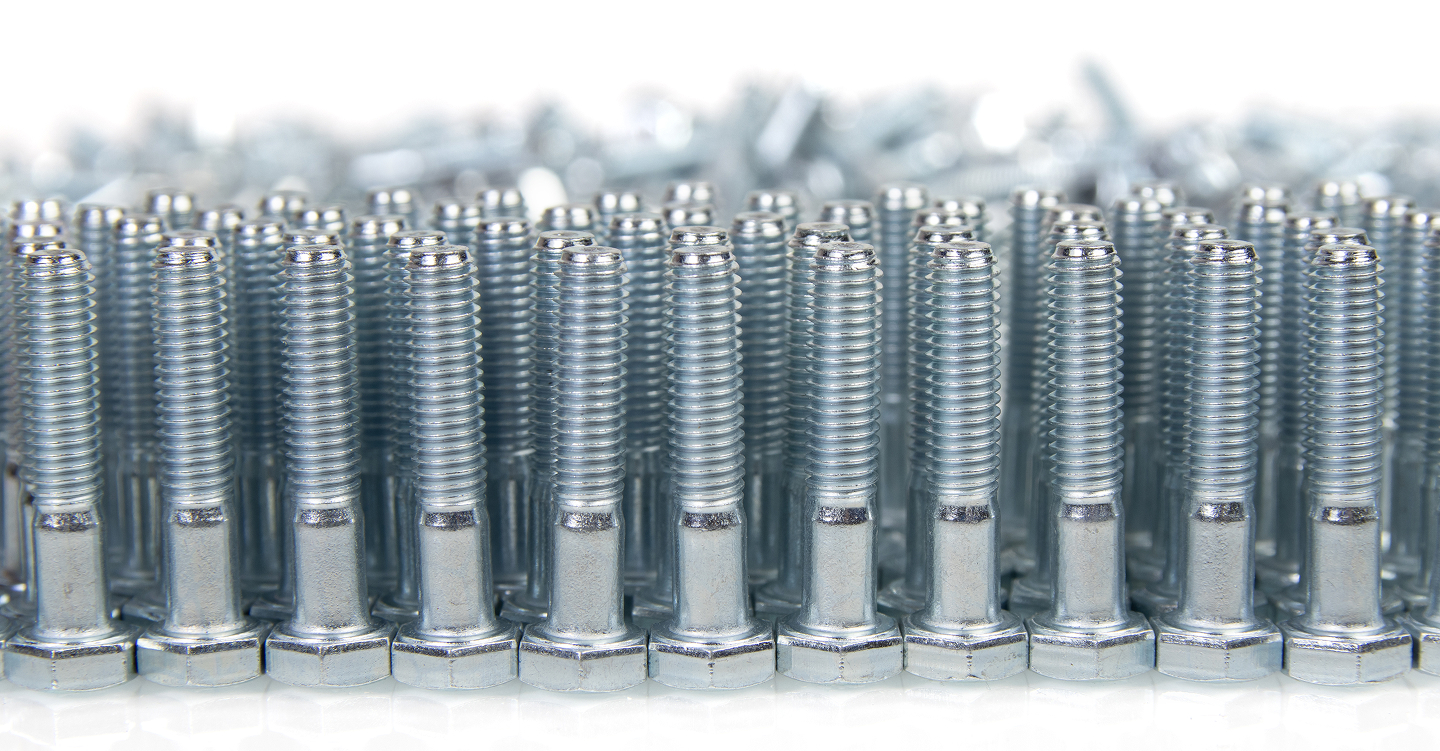
The head style should suit the assembly method. Hex bolts are common in construction and machinery because they are easy to tighten with standard tools. Socket screws are useful where space is limited and higher tool engagement is required. Machine screws, self-tapping screws, threaded rods, washers, anchor fasteners and nuts each solve a different problem. The correct product is the one that fits the joint, not the one that simply appears stronger.
You should also consider the surface condition and finish. Stainless steel fasteners rely on a clean passive surface for corrosion resistance. Poor storage, contamination or incorrect handling can reduce performance. If the fasteners are going into a visible, exposed or hygiene-sensitive area, ask about finish and handling expectations.
For industrial buyers, documentation may be important. Depending on your application, you may need material test certificates, compliance documents, batch traceability or inspection records. These should be requested at the quotation stage, not after dispatch.
Finally, evaluate the supplier. A responsible stainless steel fastener manufacturer will ask questions. They will want to understand your application, environment, grade requirement and delivery needs. Be cautious of any supplier who treats all stainless steel fasteners as interchangeable.
At Swastik Industrial Works, the objective is not merely to sell a fastener. The objective is to help you select the fastening solution that suits your requirement, performs reliably and reduces avoidable risk. For industrial applications, the right choice begins with clarity – and clarity begins with a complete specification.
A useful buyer habit is to create a small selection checklist before every major order. Include application, load, environment, grade, thread, standard, quantity, delivery and certification. This simple discipline improves communication between your purchase team and the supplier. It also helps prevent the familiar problem of ordering the same fastener again even after the project condition has changed. In fasteners, repeated purchasing is convenient, but verified purchasing is safer.