


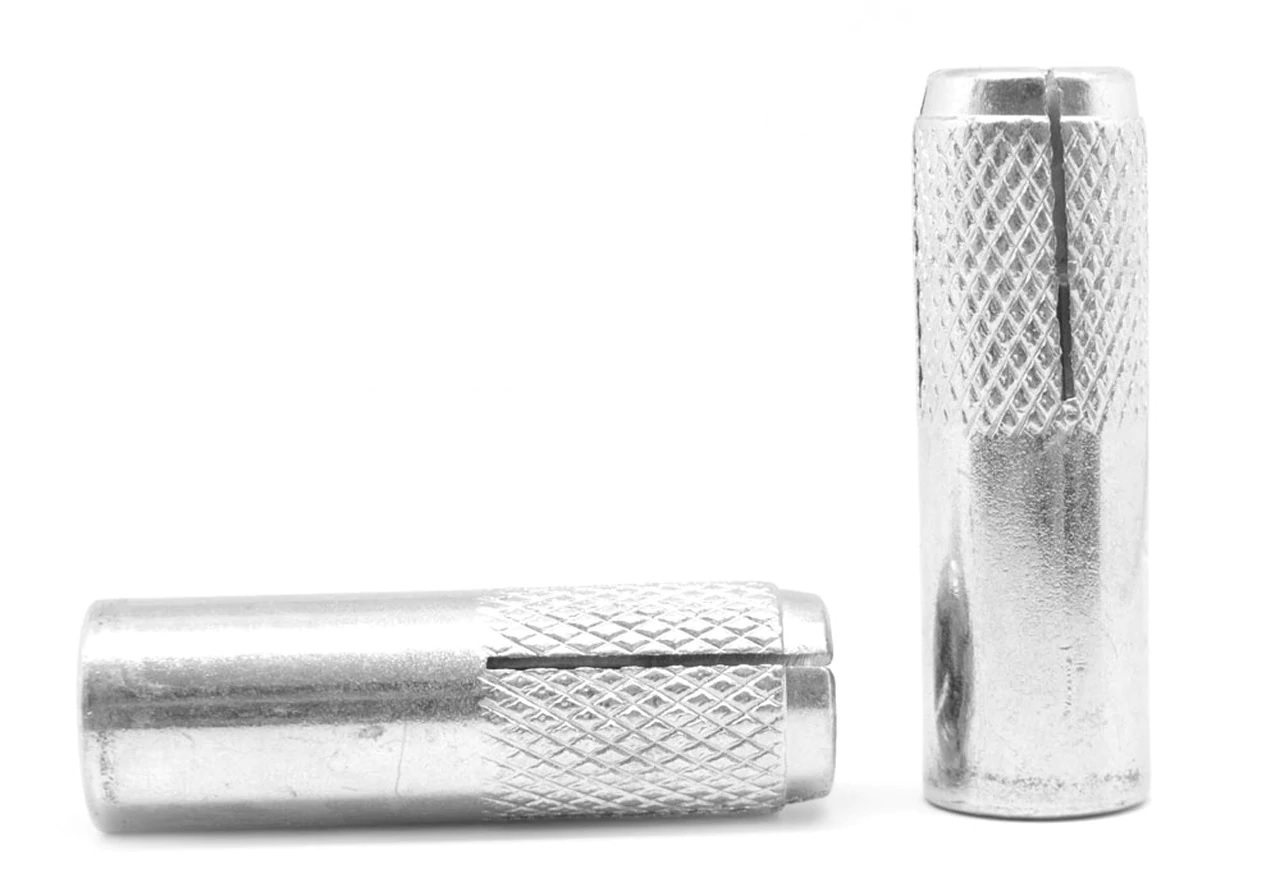
Premium A2 (304) and A4 (316) stainless steel Bullet Anchor. Available in metric coarse threads and select UNC/BSW on request. Mill Test Certificates (MTC), strict dimensional tolerances, and fast dispatch from ready stock.
Stainless Steel Bullet Anchor
TRSUTED SS Bullet Anchor FOR DEMANDING APPLICATION
Key Specifications
Standards
-
Grades (Material)
A2 (304), A4 (316)
Strength Classes
-
Threads
Metric coarse (default). Fine/UNC/BSW available on request
Sizes
M6 to M 20 (others on request)
Lengths
-
Head
-
Marking
Grade/class & manufacturer ID as applicable
Certificates
MTC 3.1 / chemical composition & mechanicals available
Compliance
RoHS/REACH; generally non-magnetic in solution-annealed state (slight magnetism possible after cold-work)
Choosing the Right Stainless Steel Bullet Anchor
Choosing the Right Bullet Anchor
1) What is a bullet anchor & when to use it?
A bullet anchor (also called drop-in anchor / bullet type anchor) is a flush-setting expansion anchor used mainly in concrete:
It is installed completely inside the drilled hole (flush with the surface).
Expansion is done by hammering a setting tool / internal plug, which forces the internal wedge to expand against the hole wall.
A separate bolt or threaded rod is then screwed into the internal thread of the anchor.
Use a bullet anchor when you need:
A flush, hidden anchor where nothing should protrude when the fixture is removed
To use standard metric bolts / threaded rods that can be removed and replaced
A medium to heavy-duty fixing into good quality concrete
Typical applications:
Suspended supports (pipe hangers, cable trays, ducting) from concrete ceilings
Machine base plates, railing posts, mounting brackets
Temporary fixings where the bolt may be removed but the anchor can remain in the slab
Interior fit-out and MEP installations (HVAC, sprinkler systems, electrical supports)
Bullet anchors are designed for solid concrete (slabs, beams, soffits), not for hollow block or weak masonry.
2) Base material – where should I use bullet anchors?
Best base material:
Normal-weight concrete with adequate strength (typical structural grades like M20 and above)
Not recommended for:
Hollow block or perforated brick (insufficient bearing surface)
Very weak or crumbly masonry
Thin sections where you cannot achieve minimum embedment
For brick/block/stone, use sleeve anchors, frame anchors or chemical anchors instead.
Mechanical Properties (Guide)
Mechanical Properties (Guide) – Bullet Anchors
Bullet anchors are expansion anchors with internal threads.
Their capacity depends on both the steel of the anchor and the concrete it is installed in.
1) Steel behaviour
Bullet anchors are usually made from:
Carbon steel (for zinc-plated types)
Stainless steel (for A2/A4 corrosion-resistant types)
Key steel properties:
Tensile strength – defines the maximum pull-out through steel fracture (if concrete holds)
Shear strength – relevant when the bolt/rod applies shear at the concrete surface
In many practical cases, concrete failure (pull-out/cone) occurs before steel fracture, especially at larger embedments.
2) Concrete-related performance
For a bullet anchor of a given size in a particular concrete grade:
In tension:
Load is transferred via the expanded sleeve to the concrete.
Limits may be:
Concrete cone breakout – a cone of concrete pulls out around the anchor
Pull-out if the anchor is under-expanded or embedment is insufficient
In shear:
Shear capacity depends on:
Shear strength of the bolt/anchor
Concrete edge distances and thickness
Manufacturers provide working / characteristic loads for:
Different anchor sizes (M6, M8, M10, M12, M16)
Different concrete strengths
Different tension and shear loading conditions
Designers then apply safety factors according to codes (IS/EN/ACI etc.) for final allowable loads.
3) Behaviour under service loads
For a properly set bullet anchor:
Under tension
The anchor remains fully embedded and the fixture/rod is clamped to the concrete surface.
Overload leads to progressive concrete cracking and cone breakout, or eventual steel failure if concrete is strong and embedment deep.
Under shear
The rod/bolt carries shear across its cross-section, while the anchor transfer point at the concrete surface and edge distances limit failure mode.
If near edges, concrete edge breakout may govern.
6000+ Products
Trusted by 2000+ Clients
40+ Years of Experience
Exporting to 12+ Countries
What We Do
From a vast manufacturing facility situated in GIDC Wadhwan, Gujarat to strategic
sales offices in Mumbai and Chennai, we design, produce, and deliver a wide array of stainless steel
fasteners, hex bolts, machine screws, socket screws, washers, nuts, self‑tapping screws, threaded rods,
anchor fasteners, and specialty material products, engineered for demanding sectors like petrochemicals,
pharmaceuticals, automotive, and construction.
Our Legacy & Mission
Founded on a vision of precision and service, we have consistently expanded our
capabilities to meet evolving industrial needs. Our commitment to "We Deliver Quality" reflects in the
long-term relationships we build with clients across India and abroad.
Frequently Asked Questions
What is a bullet anchor?
A bullet anchor (drop-in anchor) is a flush-setting expansion anchor for solid concrete.
It sits completely inside the hole and has internal threads. After expansion with a setting tool, you can screw in a bolt or threaded rod to fix your bracket, pipe support, tray, or machine.
Where are bullet anchors typically used?
They are very common for:
Suspended pipe supports and cable trays from concrete ceilings
HVAC ducts, sprinklers and MEP supports
Machine base plates and small structural brackets
Interior fit-out where the bolt/rod may be removed later but the anchor stays in the slab
Because they sit flush, they’re ideal where you don’t want a stud permanently sticking out of the concrete.
What base materials are suitable for bullet anchors?
Bullet anchors are designed for normal-weight, solid concrete (slabs, beams, columns).
They are not recommended for:
Hollow blocks / perforated bricks
Very weak or crumbly masonry
Thin screeds or toppings without sufficient thickness
For brick/block, it’s better to use sleeve anchors or chemical anchors.
What is the main advantage of a bullet anchor compared to wedge or tam anchors?
Key advantages:
Flush installation – anchor is flush with surface, only the bolt/rod is visible when installed.
Removable bolt – you can remove the bolt/rod and re-use the same anchor in the concrete.
Very clean look and convenient for suspended threaded rod systems.
Wedge / tam / pin type anchors leave a projecting stud and nut permanently in place; bullet anchors give a hidden insert with an internal thread.
Do bullet anchors work in ceilings?
Yes – this is one of their main uses:
Install flush in the concrete soffit (ceiling).
Expand with a setting tool.
Screw in a threaded rod to hang pipes, ducts, or trays.
They are widely used in MEP installations for overhead services.


