


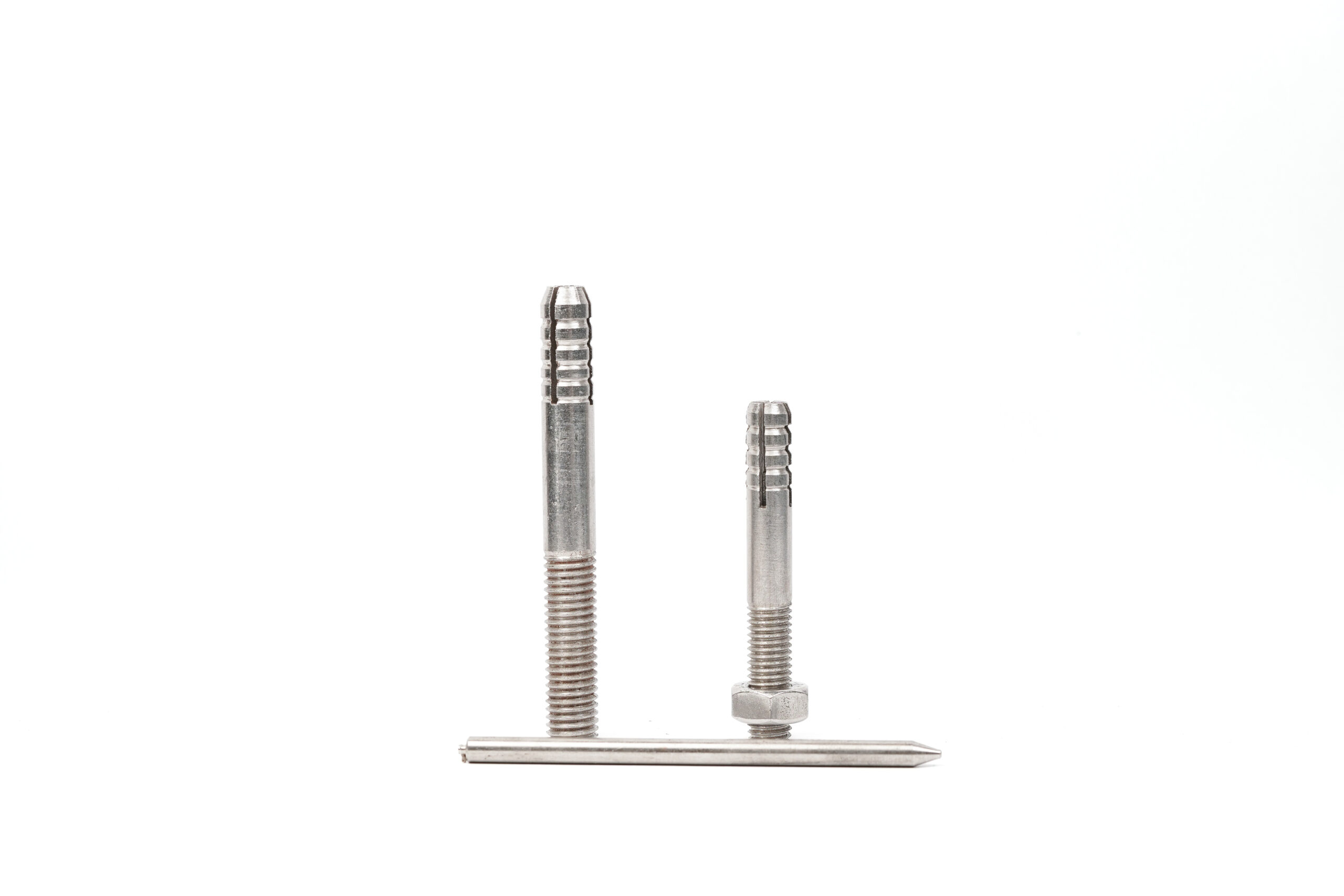
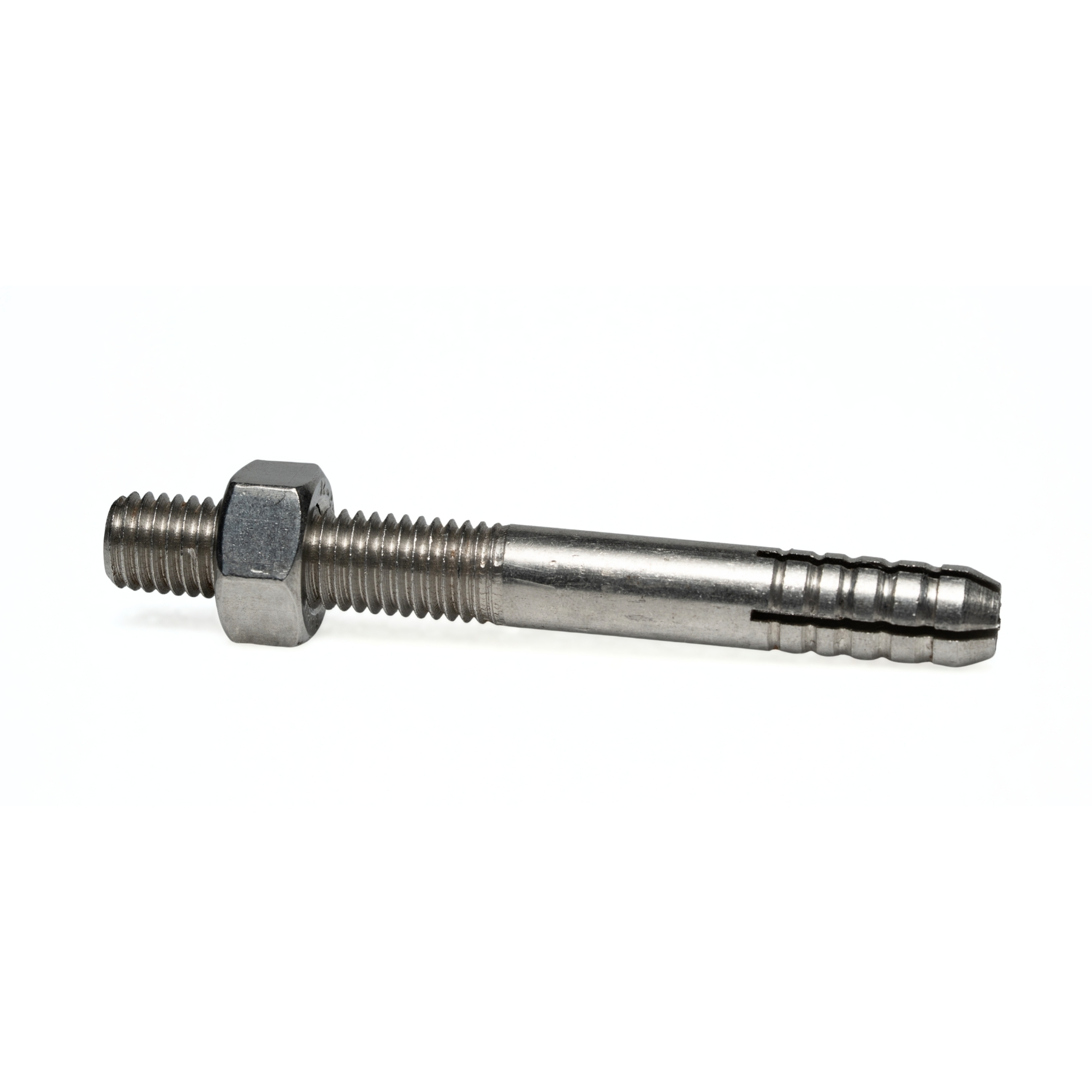

Premium A2 (304) and A4 (316) stainless steel Pin Type Anchor. Available in metric coarse threads and select UNC/BSW on request. Mill Test Certificates (MTC), strict dimensional tolerances, and fast dispatch from ready stock.
Stainless Steel Pin Type Anchor
TRSUTED SS Pin Type Anchor FOR DEMANDING APPLICATION
Key Specifications
Standards
-
Grades (Material)
A2 (304), A4 (316)
Strength Classes
-
Threads
Metric coarse (default). Fine/UNC/BSW available on request
Sizes
M6 to M 20 (others on request)
Lengths
-
Head
-
Marking
Grade/class & manufacturer ID as applicable
Certificates
MTC 3.1 / chemical composition & mechanicals available
Compliance
RoHS/REACH; generally non-magnetic in solution-annealed state (slight magnetism possible after cold-work)
Choosing the Right Stainless Steel Pin Type Anchor
Choosing the Right Pin Type Anchor
1) What is a pin type anchor & when to use it?
A pin type anchor (also called pin type anchor bolt / hammer set anchor) is a mechanical expansion anchor for concrete.
It typically consists of:
An externally threaded stud with a nut and washer
An expansion sleeve or shell near the bottom
A hardened drive pin inside the stud
Installation:
You insert the anchor in a drilled hole and hammer the pin down.
The pin forces the tapered part of the stud/shell to expand, gripping the concrete.
Then you tighten the nut against your base plate or fixture.
Use a pin type anchor when you need:
A medium/heavy-duty fixing into solid concrete
A system that gives positive expansion by hammering the pin
A simple, reliable anchor that doesn’t rely only on torque to expand
Typical applications:
Base plates of machinery and structural steel
Columns, supports, cable trays, pipe supports
Racks, brackets, and equipment foundations in concrete
Like wedge anchors, pin type anchors are intended for concrete, not for hollow block or weak masonry.
Mechanical Properties (Guide)
Mechanical Properties (Guide) – Pin Type Anchors
Pin type anchors are expansion anchors. Their performance is governed by both the steel (anchor and pin) and the concrete.
Manufacturers give design values for tension and shear in specific concrete grades.
1) Steel properties
Anchor studs and pins are typically made from:
Carbon steel (for zinc-plated/HDG versions) with strength similar to bolt grades around 5.8–8.8 (depending on product).
A2 (304) or A4 (316) stainless steel for corrosion-resistant versions.
Key properties:
Tensile strength (fᵤ) – defines steel failure load in tension.
Yield strength (fᵧ) – used for design of deformation and safety.
Shear strength – typically approximated from tensile strength (e.g. fᵤ/√3 in design formulas).
However, many failures occur in concrete (cone breakout, pull-out) before steel yields, especially for larger embedments.
6000+ Products
Trusted by 2000+ Clients
40+ Years of Experience
Exporting to 12+ Countries
What We Do
From a vast manufacturing facility situated in GIDC Wadhwan, Gujarat to strategic
sales offices in Mumbai and Chennai, we design, produce, and deliver a wide array of stainless steel
fasteners, hex bolts, machine screws, socket screws, washers, nuts, self‑tapping screws, threaded rods,
anchor fasteners, and specialty material products, engineered for demanding sectors like petrochemicals,
pharmaceuticals, automotive, and construction.
Our Legacy & Mission
Founded on a vision of precision and service, we have consistently expanded our
capabilities to meet evolving industrial needs. Our commitment to "We Deliver Quality" reflects in the
long-term relationships we build with clients across India and abroad.
Frequently Asked Questions
What is a pin type anchor?
A pin type anchor is a mechanical expansion anchor for concrete.
It includes:
A threaded stud with nut and washer
An expansion sleeve
A hardened internal drive pin
You insert it into a drilled hole and hammer the pin. The pin drives the tapered section into the sleeve, causing it to expand and grip the concrete. The nut is then tightened to clamp your fixture.
Where can I use pin type anchors?
Pin type anchors are designed for solid, normal-weight concrete and are commonly used for:
Machine and equipment base plates
Structural steel columns and frames
Racks, brackets, pipe supports, cable tray supports
Guard rails, ladders, platforms, and general fixings
They are not suitable for hollow block, brick, AAC, or very weak substrates.
How is a pin type anchor different from a wedge anchor?
Both are expansion anchors for concrete, but:
Wedge anchor
Expansion is achieved mainly by torqueing the nut, pulling a cone into a wedge clip.
Pin type anchor
Expansion is achieved by hammering a pin that drives a tapered section into an expansion sleeve.
Nut is then tightened for clamping, not for primary expansion.
Functionally, both can be used for medium to heavy-duty concrete fixings, but their installation method and internal design are different.
Can I use pin type anchors in brick or block walls?
Generally no.
Pin type anchors are intended for solid concrete. In brick or block:
The expansion forces can crush the masonry, leading to poor holding or failure.
For brick/block, use sleeve anchors, chemical anchors, or frame anchors specifically designed for that material.
How deep do I drill the hole for a pin type anchor?
Drill diameter must match the anchor size (e.g. M12 anchor → 12 mm drill, as per datasheet).
Hole depth must be at least:
The required embedment depth +
Allowance for dust and the driven pin (usually ~10–20 mm extra).
If the hole is too shallow, the anchor won’t sit correctly or won’t expand fully, reducing capacity.


