


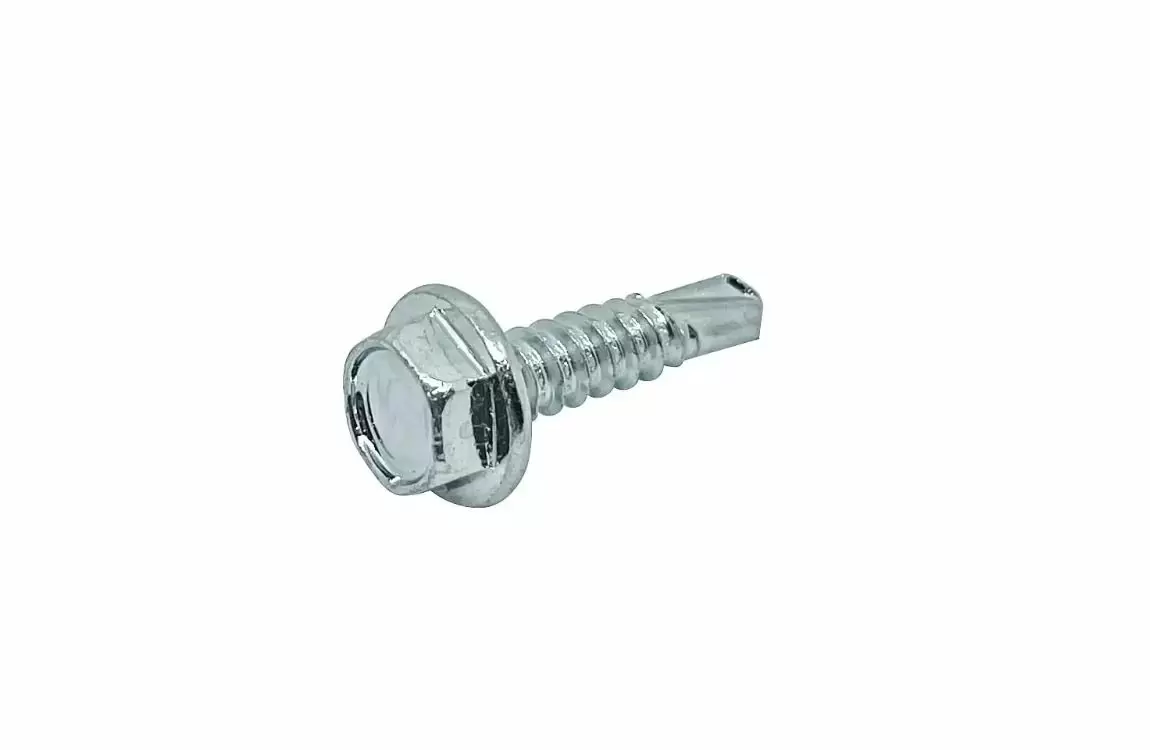
Premium A2 (304) and A4 (316) stainless steel hex head self drilling screw. Available in metric coarse threads and select UNC/BSW on request. Mill Test Certificates (MTC), strict dimensional tolerances, and fast dispatch from ready stock.
DIN 7504K
Stainless Steel Hex Head Self Drilling Screw
TRSUTED SS hex head self drilling screw FOR DEMANDING APPLICATION
Key Specifications
Standards
-
Grades (Material)
A2 (304), A4 (316)
Strength Classes
-
Threads
Metric coarse (default). Fine/UNC/BSW available on request
Sizes
M1.6 to M 70, 3/16" to 2.1/2" (others on request)
Lengths
-
Head
-
Marking
Grade/class & manufacturer ID as applicable
Certificates
MTC 3.1 / chemical composition & mechanicals available
Compliance
RoHS/REACH; generally non-magnetic in solution-annealed state (slight magnetism possible after cold-work)
Choosing the Right Stainless Steel Hex Head Self Drilling Screw
Choosing the Right SS Hex Head Self-Drilling Screw (Guide)
for stainless steel hex head self-drilling screws – roofing / cladding / sheet-to-sheet
1. What is an SS Hex Head Self-Drilling Screw?
An SS hex head self-drilling screw is:
A hexagon head screw (tightened with spanner/socket)
With an integrated self-drilling tip (“drill point”) – no separate drilling/tapping needed for thin sheets
With self-tapping machine-type thread for sheet-to-sheet fixing
Made fully or partially from stainless steel (or with stainless head/washer over carbon steel body in many commercial products)
Used mainly to fasten:
Sheet metal to sheet metal (roofing/cladding)
Sheet metal to purlins / light structural sections
Sandwich panels, roofing sheets, wall cladding, etc.
2. Very Important Reality Check – Stainless vs Drilling
Pure austenitic stainless steel (A2/A4) is not very hard, and self-drilling points need high hardness to drill into metal.
So in practice you usually see:
Carbon steel self-drilling screw with stainless head/washer cap
Drill point & main body: case-hardened carbon steel
Head + washer surface: stainless cap or stainless bonded washer
Good drilling + stainless appearance/top side corrosion resistance
Full stainless screw with special hardened drill point
More expensive
Usually limited in drilling capacity (thin sheets, aluminium, etc.)
Always check with your supplier:
Is it full SS self-drilling or carbon steel self-drilling with SS cap/washer?
Your choice depends on corrosion requirement vs drilling hardness.
3. Application & Joint Type
Use SS hex head self-drilling screws for:
Roofing sheets to purlins (steel/wood)
Wall cladding sheets to purlins
Light steel framing and sheet-metal fabrications
HVAC, ducting supports, cable trays to thin sections (within drilling capacity)
Avoid them when:
You’re fixing into very thick, hard steel beyond rated drilling capacity
Joint is structural / primary load-bearing → then use bolts/anchors as per design codes
You need flush head – then go for CSK/low profile options
4. Environment & “Stainless” Options
You will see three broad types in market:
a) Normal environment (non-coastal, general industrial)
Options:
Carbon steel self-drilling screw with zinc coating + stainless washer
Carbon steel self-drilling with stainless cap head (bi-metal)
A2 (304) self-drilling variants for thin sheet/aluminium
Choose depending on required life and budget.
b) Coastal / marine / chemical / very high corrosion
Prefer:
Bi-metal self-drilling screws:
Stainless body (often A2/A4) + hardened carbon steel drill tip welded on
Or hardened carbon steel core with full stainless encapsulation of head and exposed shank
A4 (316) versions where available for aggressive coastal/chemical atmospheres
Always clarify with supplier:
Corrosion class (C3, C4, C5 etc. if they use ISO 12944-style classification)
Type of washer: stainless with EPDM backing is standard for roofing/cladding.
c) Low-cost, low-demand indoor
Standard carbon steel self-drilling with zinc coating may be enough (not truly “SS”).
If enquiry says “SS Hex Head Self Drilling”, confirm if they accept carbon steel drill body with SS cap, or they demand full SS body.
Mechanical Properties (Guide)
Mechanical Properties (Guide) – SS Hex Head Self-Drilling Screws
Because there are multiple constructions (carbon steel body + SS cap vs full SS), mechanical properties vary. Think in two blocks:
A. Carbon Steel Self-Drilling Core with SS Cap/Washer (Very Common)
Core material: case-hardened carbon steel
Surface: zinc / alloy coating or encapsulated under stainless cap
Tensile strength: typically in the range of 900–1200 MPa (depends on spec)
Shear capacity: high; suitable for roofing/cladding loadings
Drill point hardness: high, to allow drilling through steel
Corrosion resistance:
On exposed head – good if SS cap is used
On shank in overlap zone – depends on plating; not as corrosion-proof as solid stainless, but acceptable in many roof designs.
B. Full Stainless / Bi-Metal Self-Drilling Screws
Body: A2 (304) or A4 (316) stainless
Drill point: hardened carbon steel tip welded/attached, or specially treated stainless tip
Indicative tensile strength:
A2/A4 bodies similar to A2-70 / A4-70 (~700 MPa tensile)
Corrosion resistance:
For A4: excellent in marine/coastal environments
Notes:
Drilling capacity is often less than carbon steel-only drillers; good for thin sheets, aluminium, light steels.
For very harsh coastal environments, these give best head/surrounding corrosion resistance.
In real use, for roofing/cladding, the limiting factor is often sheet bearing & pull-through and washer sealing, not pure tensile failure of the screw.
Quick Selection Cheat Sheet (For Sales / Site)
Substrate & Thickness
Thin sheet ↔ thin purlin (within drilling capacity) → self-drilling OK
Too thick/hard → pre-drill or use bolts
Environment
Inland, non-aggressive → carbon steel self-drilling with decent coating is usually OK
Coastal / chemical → bi-metal or SS capped head + EPDM washer, ideally A4-grade contact surfaces
Head & Washer
External roofing/cladding → hex head + EPDM bonded washer
Internal/non-sealing → hex head with simple washer may be sufficient
Diameter & Length
Light sheeting → 4.8 mm
Roofing/cladding on purlins → 5.5–6.3 mm
Ensure 3–5 threads beyond purlin after fixing
Assembly
Correct socket, controlled speed
Do not over-tighten / crush washer
Keep screw perpendicular to sheet.
6000+ Products
Trusted by 2000+ Clients
40+ Years of Experience
Exporting to 12+ Countries
What We Do
From a vast manufacturing facility situated in GIDC Wadhwan, Gujarat to strategic
sales offices in Mumbai and Chennai, we design, produce, and deliver a wide array of stainless steel
fasteners, hex bolts, machine screws, socket screws, washers, nuts, self‑tapping screws, threaded rods,
anchor fasteners, and specialty material products, engineered for demanding sectors like petrochemicals,
pharmaceuticals, automotive, and construction.
Our Legacy & Mission
Founded on a vision of precision and service, we have consistently expanded our
capabilities to meet evolving industrial needs. Our commitment to "We Deliver Quality" reflects in the
long-term relationships we build with clients across India and abroad.
Frequently Asked Questions
What is an SS hex head self-drilling screw?
It’s a hexagon head screw with a drill-shaped tip that can drill, tap, and fasten in one operation through thin sheets into steel/wood, usually used for roofing, cladding, and sheet-to-sheet fixings. The “SS” part is usually the head/cap and washer, and sometimes the whole body.
Where are SS hex head self-drilling screws commonly used?
Metal roofing sheets to purlins
Wall cladding sheets to steel/wood frames
Light steel framing, ducts, channels, cable trays
Sandwich panels and sheet-metal fabrications (within drilling capacity)
They’re popular in construction, pre-engineered buildings (PEB), HVAC, and industrial sheds.
Why use a hex head instead of Phillips or Torx?
Hex head allows high torque with a spanner or hex socket
Easy to drive on site with nut-setter on drill/impact driver
Good control of washer compression during roofing/cladding installation
For exposed roofing screws, hex head is the standard choice.
Do self-drilling screws need a pilot hole?
For their rated capacity, no separate pilot hole is normally needed:
The drill point makes its own hole and then the thread forms in the base material.
However, marking / small guide holes may be used for alignment or in very hard/thick materials, as per practice.
How thick can an SS hex head self-drilling screw drill through?
It depends on:
Screw diameter and point type (#3, #5, etc.)
Core material (carbon steel vs bi-metal)
Base material hardness
Typical (approximate) ranges:
Small 4.8 mm drillers → up to 3–4 mm total steel
Heavy 5.5–6.3 mm with #5 point → up to 10–12 mm steel
Always check the manufacturer’s drilling capacity for the exact product.


